Construction & demolition debris containers serve specialized infrastructure tasks that standard municipal waste routes cannot process. General contractors and renovators managing jobs near the Atlanta BeltLine…
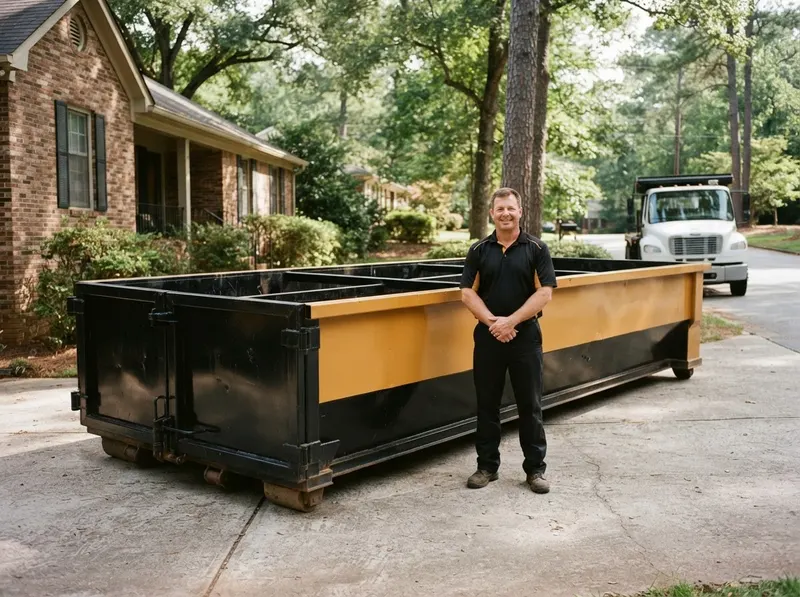
Construction & demolition debris containers serve specialized infrastructure tasks that standard municipal waste routes cannot process. General contractors and renovators managing jobs near the Atlanta BeltLine Eastside Trail or historical renovations in Grant Park and Cabbagetown require structural bins capable of holding non-compactable materials. Placing raw lumber, gypsum wallboard, masonry, and architectural metals into a general municipal stream violates Georgia Environmental Protection Division guidelines. Heavy framing tear-outs in Virginia-Highland and Buckhead demand dedicated C&D containers to prevent premature weight overages. According to standards established by the US EPA Sustainable Management of C&D Materials protocols, separating recoverable timber, aggregate, and scrap metal diverts tonnage from general landfill cells while keeping jobsites compliant.
Selecting container dimensions depends entirely on material density rather than pure spatial volume. A 10-yard container priced at $595 holds approximately 4 standard pickup truck loads and fits heavy debris like plaster, bathroom tile, or brick from historic Midtown or Inman Park bungalows. A 20-yard roll-off priced at $695 accommodates roughly 8 pickup truck loads, serving multi-room drywall gutting and structural modifications along Piedmont Avenue. When handling large-scale commercial retrofits near Ponce City Market or Collier Hills, 30-yard ($795) and 40-yard ($895) containers accommodate high-cube, lower-density waste like wood trusses and interior framing. Dense items like concrete or brick must be placed in smaller bins to remain within legal road transport limits defined by the Federal Motor Carrier Safety Administration and the Georgia Department of Transportation.
Placement operations across Old Fourth Ward, Kirkwood, and West End involve narrow street corridors and tight property setbacks. Drop zones require at least 60 feet of linear approach clearance and 14 feet of overhead space, fully clear of utility cables governed by the OSHA Construction Safety Standards. If placing a roll-off container on a public right-of-way within the city footprint, contractors must secure appropriate street permits through the City of Atlanta Department of Transportation. LoadCraft Debris Services delivers using specialized protective boards beneath container wheels to preserve private concrete and asphalt driveways from friction gouging. Hazardous items, including wet paint, liquid chemicals, and friable asbestos regulated under NIOSH Workplace Safety Guidelines, are strictly prohibited from all C&D roll-offs. Clean wood scraps and metals can be routed through facilities vetted by the Construction & Demolition Recycling Association, while non-ferrous metals qualify for diversion per Institute of Scrap Recycling Industries specifications. Environmental management follows U.S. Green Building Council standards for clean construction site sorting. For immediate site scheduling, contact dispatch directly at (470) 750-7065.
Every job gets a firm, written price after a free on-site visit.
For standards, safe disposal, and service guidance on DUMPSTER in Atlanta, GA, useful references include U.S. EPA, EPA, EPA, OSHA, Earth911, and Google Maps. General consumer and small-business resources are available from USA.gov, Better Business Bureau, FTC Consumer Advice, U.S. Small Business Administration, and Ready.gov.
Tell us about your construction & demolition debris containers job in Atlanta and we'll send a clear, written quote, usually the same day.
 LoadCraft Debris Services